ERASE Racism's Student Task Force is a student-led movement advocating for racial and socioeconomic equity. Too often, decisions are made without student voices on issues that impact their everyday life. By building a diverse team of students equipped with the tools necessary to challenge structural racism, collectively we are changing the narrative.
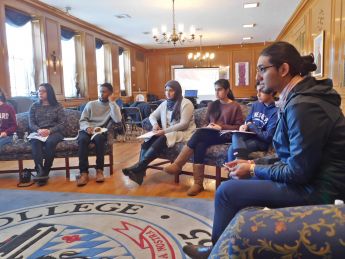
Our first Student Task Force meeting gathered students from Nassau and Suffolk County for an intimate conversation in Molloy College's cozy Kellenberg Reception Room. Introductions sparked a light-hearted conversation about the origins of each person's name, often accompanied by humorous family stories. Students interacted with one another with ease, bonding over their shared school pride or challenges and leadership involvement in their school.
Education Equity Organizer, Nyah Berg, briefed attendees on the triumphs of student coalitions on the local and national level. The agenda for the day was to identify common concerns, discuss how a student Task Force might be a voice for inclusion, and develop concrete steps to bring about positive changes. Students brainstormed shortcomings at their local schools. One common issue brought up by students was the lack of teacher diversity.
Studies have shown that having a diverse teacher workforce benefits all students. Having a teacher of the same racial background increases test scores and provides role models, for students of color, while their white counterparts also benefit as exposure to different races can combat formation of stereotypes and implicit biases that are often cultivated in homogeneous environments.
Teacher diversity can also make it more likely that teachers will engage in conversations concerning race, religion, and diversity. Some students commented on the lack of conversation within their schools about socially relevant events, such as Charlottesville and the possible termination of the Deferred Action for Childhood Arrivals (DACA) program and the repercussions for students, their families, and communities. According to some students, they were disappointed that some teachers did not feel comfortable leading discussions on topics such as these. Some teachers even said they were forbidden to do so. Policies like this deny students the opportunity to share their opinions on issues impacting their communities with other students and their teachers, further alienating the mostly white teaching staff from issues impacting students of color.
Culturally responsive education is also an important component of our Education Equity Initiative policy agenda. In Long Island, there are few resources and guidelines for districts to aid the implementation of culturally responsive teaching (CRT). As seen during the Student Task Force brainstorming session, the students believe that Long Island schools will benefit from incorporating culturally relevant material into the curriculum. Doing so will keep students engaged and promote integration. In fact, our students created posters detailing their thoughts and questions on education-related topics.
Our first Student Task Force meeting gathered students from Nassau and Suffolk County for an intimate conversation in Molloy College's cozy Kellenberg Reception Room. Introductions sparked a light-hearted conversation about the origins of each person's name, often accompanied by humorous family stories. Students interacted with one another with ease, bonding over their shared school pride or challenges and leadership involvement in their school.
Education Equity Organizer, Nyah Berg, briefed attendees on the triumphs of student coalitions on the local and national level. The agenda for the day was to identify common concerns, discuss how a student Task Force might be a voice for inclusion, and develop concrete steps to bring about positive changes. Students brainstormed shortcomings at their local schools. One common issue brought up by students was the lack of teacher diversity.
Studies have shown that having a diverse teacher workforce benefits all students. Having a teacher of the same racial background increases test scores and provides role models, for students of color, while their white counterparts also benefit as exposure to different races can combat formation of stereotypes and implicit biases that are often cultivated in homogeneous environments.
Teacher diversity can also make it more likely that teachers will engage in conversations concerning race, religion, and diversity. Some students commented on the lack of conversation within their schools about socially relevant events, such as Charlottesville and the possible termination of the Deferred Action for Childhood Arrivals (DACA) program and the repercussions for students, their families, and communities. According to some students, they were disappointed that some teachers did not feel comfortable leading discussions on topics such as these. Some teachers even said they were forbidden to do so. Policies like this deny students the opportunity to share their opinions on issues impacting their communities with other students and their teachers, further alienating the mostly white teaching staff from issues impacting students of color.
Culturally responsive education is also an important component of our Education Equity Initiative policy agenda. In Long Island, there are few resources and guidelines for districts to aid the implementation of culturally responsive teaching (CRT). As seen during the Student Task Force brainstorming session, the students believe that Long Island schools will benefit from incorporating culturally relevant material into the curriculum. Doing so will keep students engaged and promote integration. In fact, our students created posters detailing their thoughts and questions on education-related topics.
The key issues brought up during this activity included:
· School Curriculum
· Community/School segregation
· Expansion of Multicultural Opportunities
· School Climate / Relationship between Students and Teachers
· Teacher Diversity
Student Task Force members also had questions including:
· How do we involve the parents?
· How do we motivate students to make a change?
· How do schools promote teacher diversity?
When asked what brought them to the Student Task Force meeting, answers varied but a common thread was the desire to engage with other students and to understand the perspective of students hailing from different cultural or racial backgrounds than their own. Our students are pleading with us to promote integration and diversity on Long Island. Are you willing to listen?
· Community/School segregation
· Expansion of Multicultural Opportunities
· School Climate / Relationship between Students and Teachers
· Teacher Diversity
Student Task Force members also had questions including:
· How do we involve the parents?
· How do we motivate students to make a change?
· How do schools promote teacher diversity?
When asked what brought them to the Student Task Force meeting, answers varied but a common thread was the desire to engage with other students and to understand the perspective of students hailing from different cultural or racial backgrounds than their own. Our students are pleading with us to promote integration and diversity on Long Island. Are you willing to listen?


Are you interested in joining the Student Task Force? Email Nyah Berg, Education Equity Organizer at Nyah@eraseracismny.org
Join our Education Equity Working Group here.
Keep in touch
Join our Education Equity Working Group here.
Keep in touch