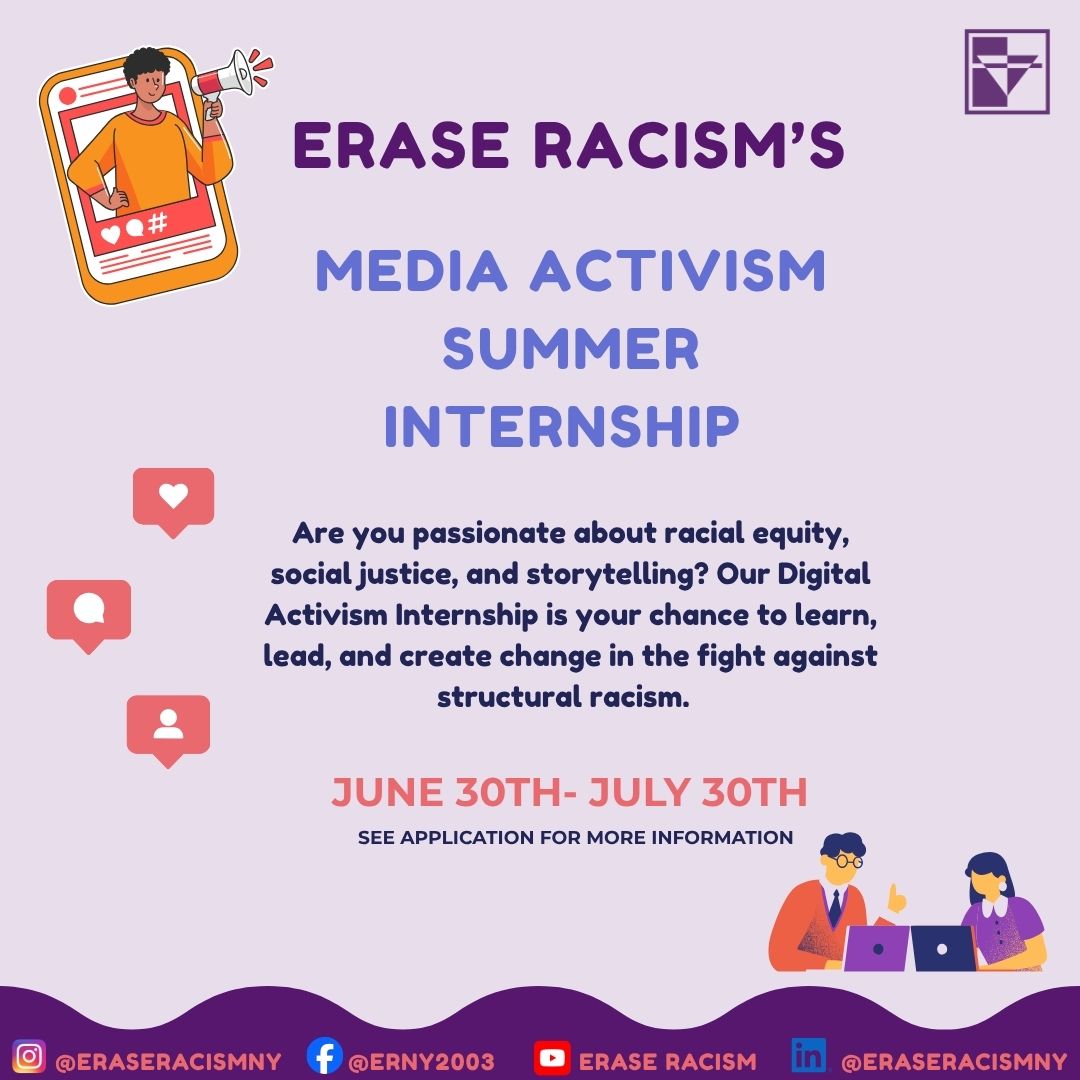
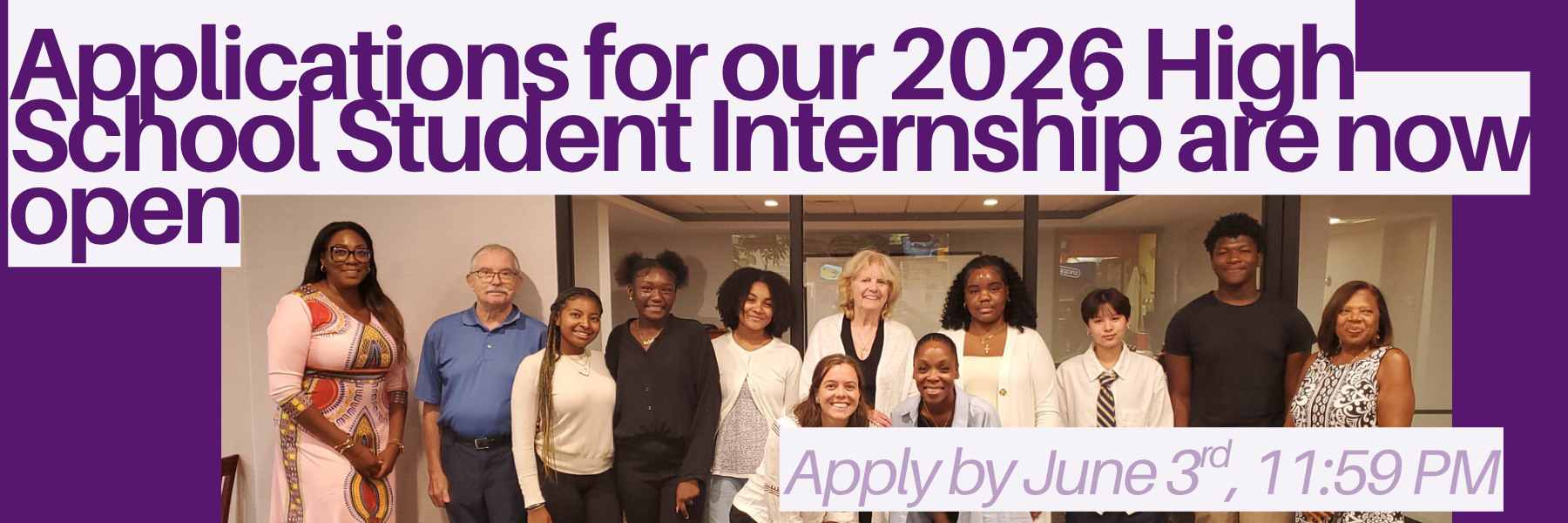
Last week, we concluded our fourth annual Student Leaders for Equity Internship (SLEI). Our SLEI program gives 8 Long Island students an opportunity to design and conduct a research project that will advance equity in their school or community. This paid program ran for 6-weeks, four days per week.
The students this year selected a diverse range of topics and projects, with the following research questions guiding their work:
- How does the lack of inclusivity and preference for lighter skin tones, in the beauty industry, affect consumers of color? (Navreet Kaur, 17, New Hyde Park Memorial High School, New Hyde Park)
- How can we increase Black and Hispanic civic engagement within my district? (Mathew Gbenebiste, 17, The Wheatley School, Old Westbury)
- How do schools enforce disciplinary actions to address the use of racial slurs among students? (Anisah Brown, 15, Calhoun High School, Merrick)
- How does medical racism affect Black Americans’ trust in and access to healthcare on Long Island? (Toby Lim, 17, Half Hollow Hills East High School, Dix Hills)
- How does the hiring process in corporate environments affect applicants of color? (Nicole Taveras, 17, Malverne High School, Malverne)
- What are the most common ways Black Women experience unequal treatment in healthcare compared to White Women?; How do healthcare providers implicit biases impact diagnosis or pain management for Black Women? What steps are most effective in reducing racial disparities in Women’s Healthcare? (Abygayle Ade, 16, Uniondale High School, Uniondale)
- How can we as a community change our code of conduct for school sports? (Jaelynn Perkins, 13, Sewanhaka High School, Floral Park)
- What is the correlation/pattern between socio-economic status and a confident, successful college applicant? (Maleah Alleyne, 16, Walt Whitman High School, South Huntington)
Based on these research questions, the students each designed a goal – for example a program, an event, or an action – related to their research. The goals ranged from starting a club dedicated to civic engagement, to amending Sports Codes of Conduct, to creating a website with resources for college applications, and so on. While we did not expect the students to complete their research of their goals over the course of 6 weeks, each student left the internship with critical materials for executing the rest of their projects throughout the school year. This includes materials for presenting their research to stakeholders – a detailed presentation, an abstract, a personal and professional biography, and a research plan with monthly timestamps – along with a personal monthly organizer and goals. The students had the opportunity to present their projects to important community stakeholders – principals and superintendents from different districts across Long Island, ERASE Racism Board Members, and their parents.
Students had a weekly research seminar with Dr. Margaret Echelbarger of Stony Brook University, which featured guest speakers like Dr. David Munguia Gomez of Yale University and Dr. Aris Clemons, of University of Tennessee. Students also attended a field trip with Preservation LI at the Joseph Lloyd Manor House, where we learned about the history of Jupiter Hammon, an enslaved writer who lived on the property, and the history of slavery on Long Island.
The students left the internship reporting increased skills in public speaking, researching, and collaboration. In an anonymous survey following the internship, all students reported that the internship met their expectations, that they would recommend this internship to other students, and that they felt prepared to execute their personal projects throughout the school year. Some other anonymous feedback highlights included:
- “I'm so grateful for the opportunities I had here, making connections and working on important research. I think I'll carry this internship with me for a long time, and I'll miss coming back to the office twice each week.”
- “It was amazing, so is everyone here, I feel like I grew a lot over the course of the internship and I can’t wait to be in the student task force.”
- “I would recommend this internship to other students. This internship has been very informative and you really do learn professional soft skills that will help you in your career. I think I am smarter and more articulate after this internship experience.”
- “I think the work ERASE [Racism] does and the information it provides to its interns and student task force is so important. Additionally, expanding knowledge through research is an opportunity that is so valuable and comes with numerous skills that a person would benefit from carrying in life.”
- “Yes I would [recommend this internship], it would be a great learning experience for kids. They would learn to collaborate with others, professionalism, and office etiquette.”
- “I would recommend this internship to other students, especially if they're passionate about civics. It's very educational but at the same time you feel autonomous in regards to your own work and developing a project. It teaches you a lot about our community but it also allows you to self-improve and learn about yourself and colleagues along the way. It's a good way to develop a sustainable work-ethic and get a glimpse of what working as an adult may be like.”
Each of the 8 students will continue to work with us on a volunteer-basis through our Student Task Force, a yearlong, self-selecting program where students are given the opportunity to lead conferences for over 200 other students across LI, connect with professional mentors in their field of interest, and, most important, connect with other students across racial, socio-economic, and district lines in order to advance equity.
Click here for photos from this summer!