July 3, 2018
 For decades, discriminatory housing policies have made our public schools racially segregated and unequal. Very little has been done to rectify government-sanctioned discrimination, which tied race to property values to the benefit of whites. And even less has been done to address the dangerous myth that more white students means higher quality schools; acceptance of this myth leads to white flight and ongoing discrimination against non-white students. The only meager form of reparations has been through affirmative action policies that give preferences to equally qualified non-white applicants. Now the current administration is attempting to take away affirmative action in higher education. In addition to eliminating one of the only tools that currently exists to rectify structural racism in our education system, this order will also lead to less diverse learning environments throughout the nation. For decades, research has shown that diverse classroom environments benefit all students. For more information on these benefits, see this story map: "Long Island Students Deserve Diversity".
For more on this topic see, “Trump Officials Reverse Obama’s Policy on Affirmative Action in Schools”
 Share this page:
August 1, 2018
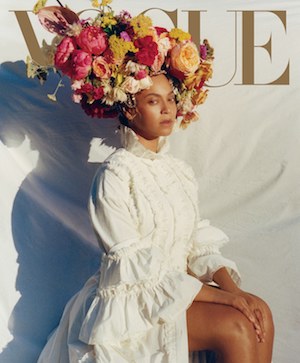 For the first time in its 126 year history, Vogue hired a black photographer to shoot the magazine's cover image. Why now? Unfortunately, this historic decision wasn't initiated by Vogue, but rather mega-star Beyonce. In addition to being the on the cover of the prestigious September issue, Beyonce and her team took over the creative direction of her entire story, which included hiring rising black photographer Tyler Mitchell, who is 23, to shoot the cover. For the first time in its 126 year history, Vogue hired a black photographer to shoot the magazine's cover image. Why now? Unfortunately, this historic decision wasn't initiated by Vogue, but rather mega-star Beyonce. In addition to being the on the cover of the prestigious September issue, Beyonce and her team took over the creative direction of her entire story, which included hiring rising black photographer Tyler Mitchell, who is 23, to shoot the cover.
In an article for The Guardian, 19-year old David Uzochukwu, who is also a black photographer, explains how important it is to have other people of color in the fashion industry. He said that he got to shoot FKA twigs because he was found online by other black creatives. He further explains "It's still early days for me but I know for sure that having that support is a super-important aspect if you are not white. Things would have been so different if I didn't have that sort of community willing to use me."
In her interview with Vogue,Beyoncé explained her decision:
"Until there is a mosaic of perspectives coming from different ethnicities behind the lens, we will continue to have a narrow approach and view of what the world actually looks like. That is why I wanted to work with this brilliant 23-year-old photographer Tyler Mitchell... If people in powerful positions continue to hire and cast only people who look like them, sound like them, come from the same neighborhoods they grew up in, they will never have a greater understanding of experiences different from their own. They will hire the same models, curate the same art, cast the same actors over and over again, and we will all lose."
To read Uzochukwu’s full article in the Guardian, see "Why it takes Beyoncé to get a black photographer on the cover of US Vogue"
To read Beyonce's full interview in Vogue, see "Beyoncé in Her Own Words: Her Life, Her Body, Her Heritage"
Share this page:
August 6, 2018
Why it takes Beyoncé to get a black photographer on the cover of US Vogue
For the first time in its 126 year history, Vogue hired a black photographer to shoot the magazine's cover image. Why now? Unfortunately, this historic decision wasn't initiated by Vogue, but rather mega-star Beyonce. In addition to being the on the cover of the prestigious September issue, Beyonce and her team took over the creative direction of her entire story, which included hiring black, 23-year old Tyler Mitchell to shoot the cover.
In an article for The Guardian, 19-year old David Uzochukwu, who is also a black photographer, explains how important it is to have other people of color in the fashion industry. He said that he got to shoot FKA twigs because he was found online by other black creatives. He further explains "It's still early days for me but I know for sure that having that support is a super-important aspect if you are not white. Things would have been so different if I didn't have that sort of community willing to use me."
HOW DOES THIS CONNECT TO STRUCTURAL RACISM?
Fashion has a huge role in society to define culture and give value to certain looks and style. During the rise of colonialism, whiteness became associated with beauty. This history still reverberates throughout the fashion world. Today, there is still a lack of ethnic and racial diversity in every aspect of the fashion industry, including among models, designers, photographers and creative directors.
According to a New York Times article from just a few years ago, of the 260 shows at New York Fashion Week only three were by African-American designers. This mirrors the percentage of African-American designers who are members of the Council of Fashion Designers of America: approximately 12 out of 470.
For more information see "Fashion's Racial Divide".
July 3, 2018
Trump Officials Reverse Obama’s Policy on Affirmative Action in Schools
The Trump administration is reversing Obama administration policies that called on universities to consider race as a factor in diversifying their campuses. School officials who keep their race-conscious admissions policies intact would do so knowing that they could face a Justice Department investigation or lawsuit, or lose funding from the Education Department.
HOW DOES THIS CONNECT TO STRUCTURAL RACISM?
For decades, discriminatory housing policies have made our public schools racially segregated and unequal. Very little has been done to rectify government-sanctioned discrimination, which tied race to property values to the benefit of white individuals and majority white communities. And even less has been done to address the dangerous myth that more white students means higher quality schools; acceptance of this myth leads to white flight and ongoing discrimination against non-white students. Affirmative action policies in higher education serve as one of the few ways the government has tried to rectify its involvement in creating a separate and unequal school system. Without these policies, we should expect less diversity on college campuses.
To read more on President Trump's reversal see, “Trump Officials Reverse Obama’s Policy on Affirmative Action in Schools”
March 2, 2018
The Newest U.S. Sentencing Commission Nominee is Anti-Prison Reform
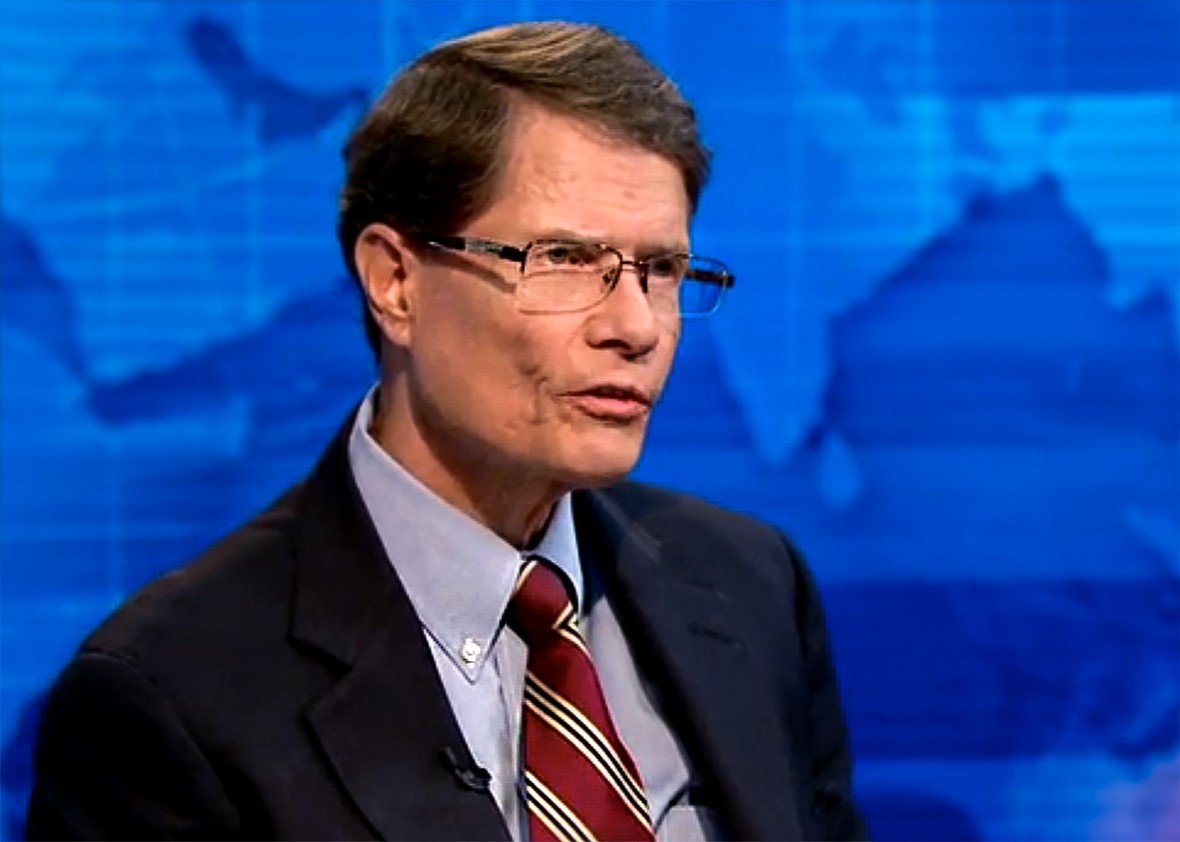
The U.S. Sentencing Commission is a bipartisan agency. Its mission is to reduce sentencing disparities and establish sentencing guidelines for the judicial branch. Its aim is to foster effective and efficient crime policy.
William G. Otis was nominated to the agency by President Trump, but his appointment has been met with strong criticism from criminal justice advocates.
Otis has a track record of supporting stiff mandatory punishments for drug crimes and has made several derogatory racially-based remarks. Also, he has openly stated that he is against reducing sentencing for minor drug offenses.
William G. Otis stated that, "When Fifth Circuit Judge Edith Jones said at a University of Pennsylvania Law School talk that blacks and Hispanics are more violent than whites, a consortium of civil rights organizations filed a complaint. The complaint calls for stern discipline, on the grounds that the remarks were discriminatory and biased. So far as I have been able to discover, it makes no mention of the fact that they're true."
HOW DOES THIS RELATE TO STRUCTURAL RACISM
The belief that blacks and Latinos are more violent than whites is a myth. The report, “Race and Hispanic Origins of Victims and Offenders, 2012-2015”, done by the U.S. Department of Justice, proves this. The report found that of all 5,833,800 violent victimizations, 43.8% of the offenders are white, 22.7% are black, and 14.4% are Latino. The study shows that most intra-racial violent victimizations are done by white offenders. During 2012-15, the rate of white-on-white violent crime (12.0 per 1,000) was about four times higher than black-on-white violent crime (3.1 per 1,000).
The true inequity is in our criminal justice system. Historically, people of color have faced harsher sentencing than their white counterparts. Racial disparities in sentencing are consistent with a larger pattern of racial inequities that plague the U.S. criminal justice system. Communities with large amounts of people of color are policed heavier than predominately white communities, leading to an increase in arrests. Studies have even shown that black drivers are three times more likely to have their cars searched by police than white drivers.
A report on Jury Selection done by Michigan State University College of Law showed that North Carolina prosecutors were excluding black people from juries in capital cases at twice the rate of other jurors, even though studies show that excluding black people from juries can influence deliberations and verdicts. The lack of people of color in jury selections negatively impacts criminal trials, as does some practices occurring in prosecuting and sentencing. For example, Black people are more likely to be offered a plea deal that includes prison time than white people. The United States Sentencing Commission ‘s report, “Demographic Differences in Sentencing: An Update to the 2012 Booker Report” found that black men who commit the same crimes as white men receive federal sentences that are an average of 20 percent longer for the same offense.
Due to his support of harsh mandatory punishments, unfounded views on race related criminal activity, and lack of accurate knowledge, nominating William G. Otis to the U.S. Sentencing Commission is a step in the wrong direction. If allowed to join the United States Sentencing Commission, based on previous statements and actions, he will attempt to create further inequality in a justice system that is already suffering from racial disparity.
For more on William G. Otis's nomination , see "Trump Pick For Sentencing Commission Has History Of Racially Charged Remarks"
References
https://www.npr.org/2018/03/02/590236153/trump-pick-for-sentencing-commission-has-history-of-racially-charged-remarks
https://www.bjs.gov/content/pub/pdf/rhovo1215.pdf
https://www.ussc.gov/sites/default/files/pdf/research-and-publications/research-publications/2017/20171114_Demographics.pdf
January 30, 2018
Baltimore Police Protocol: Keep Toy Guns Around Just in Case You Shot an Unarmed Person
Baltimore Police Department has been under intense public scrutiny following the murder of Freddie Gray by Baltimore Police Officers. All charges against the officers were eventually dropped but the Baltimore Police Department is back in the headlines for their latest scandal.
Recently, a group of Baltimore cops were accused of selling confiscated drugs, robbing drug dealers, and much more.
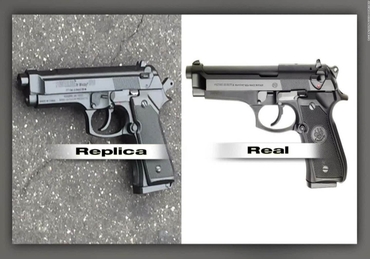
Detective Marcus Taylor, was found with a fake gun in his patrol car. During interrogation, one of his team members explained why. Detective Maurice Ward, one of the officers implicated in the corruption charges said that his sergeant, Wayne Jenkins, told his team members to carry toy guns in case they found themselves in a situation where an unarmed suspect was shot and they needed to plant evidence.
In April of 2016, a 13-year-old boy was shot by Baltimore police and a replica gun was found on the scene. With the recent revelations, many are questioning the validity of evidence presented by Baltimore police officers.
HOW DOES THIS RELATE TO STRUCTURAL RACISM
African Americans make up only 13% of the population but are 35% of the unarmed people that were killed by police in 2017.
Many times, the police blame their deadly response on the actions of their victims but if police officers are manufacturing evidence, the public may never know the truth behind hundreds of fatal police shootings.
According to the report, "Mapping Police Violence", most unarmed people killed by police in 2017 were people of color. Black people were more likely to be killed by police, more likely to be unarmed, and less likely to be threatening someone when killed.
12 –year-old Tamir Rice was killed by a police officer who said he thought Rice had a weapon. The weapon turned out to be a toy gun but now that we have uncovered this deplorable police tactic, more questions are being raised.
This is not the first time cops have been caught planting evidence. Another Baltimore officer, Richard A. Pinheiro , was charged with misconduct and fabricating evidence after his body camera caught him planting drugs in a nearby field.
For more on this see, " Baltimore Cops Kept Toy Guns to Plant Just in Case They Shot an Unarmed Person".
|
|